

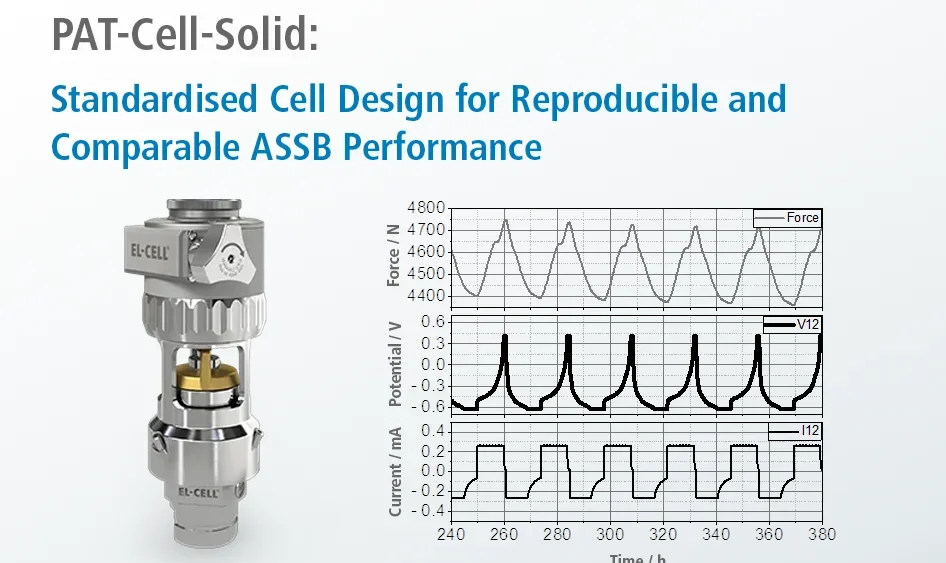
The advancement of all-solid-state batteries (ASSBs) is significantly hindered by a lack of reproducibility and comparability in performance data across research institutions. This issue arises from the absence of standardised cell designs and assembly procedures, leading to inconsistent results even when identical materials are used. A 2024 interlaboratory study involving... read more →
Jun
10
May
26
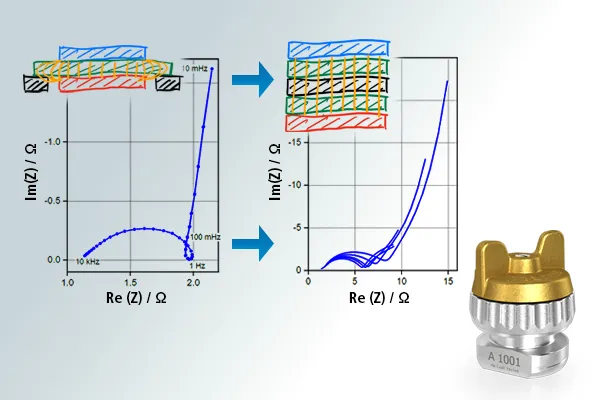
Determining the impedance of electrode materials in Lithium-Ion Batteries (LIB) and Sodium-Ion Batteries (SIB) at different states of charge (SOC) is paramount for evaluating battery performance. Especially, a reliable, artefact-free measurement of single electrode impedances at different states of charge (SOC) is a tedious endeavour since this usually involves assembling... read more →
Feb
05
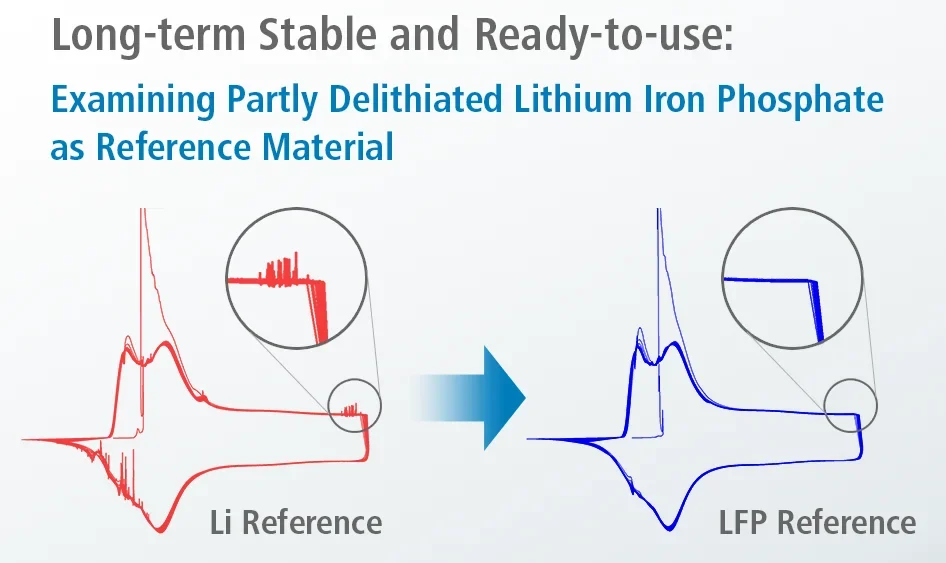
Lithium iron phosphate (LiFePO₄, LFP) is a well-established cathode material in lithium-ion battery research due to its excellent electrochemical stability, intrinsic safety, non-toxicity, and low cost. Beyond its commercial success, LiFePO₄ has attracted increasing attention as a reference material due to its highly stable and reproducible electrode potential in non-aqueous... read more →
Dec
04
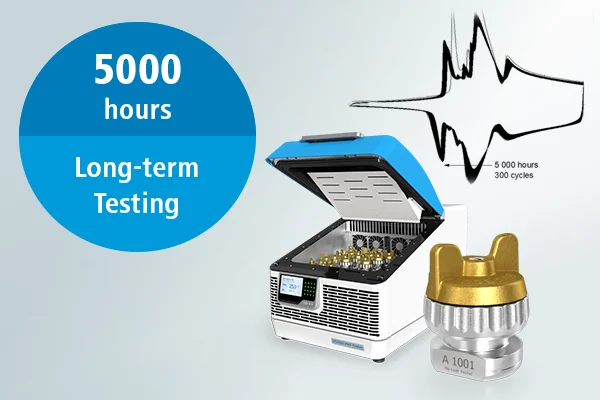
New 5000-hour Sample Test Results Some time ago, we demonstrated the outstanding reliability and accuracy of the PAT-Cell, our standard 3-electrode battery test cell, in combination with our PAT-tester-i-16 potentiostat, with a 2000-hour measurement. In this new sample test, we have once again cycled a PAT-Cell in a PAT-Tester-i-16, but... read more →
Oct
16
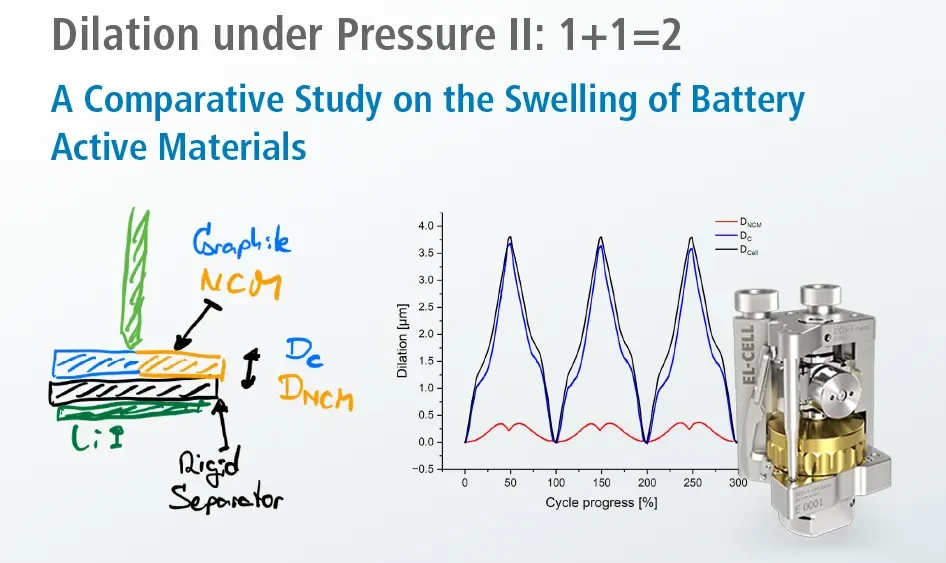
In this work, we present a comparative study on the dilation of standard battery active materials: NCM (111) and graphite. We obtained the half-cell dilations of both electrodes by using the ECD-4-nano electrochemical dilatometer. Additionally, we measured the full-cell dilation of a cell built with both materials mentioned above and a... read more →
Oct
10
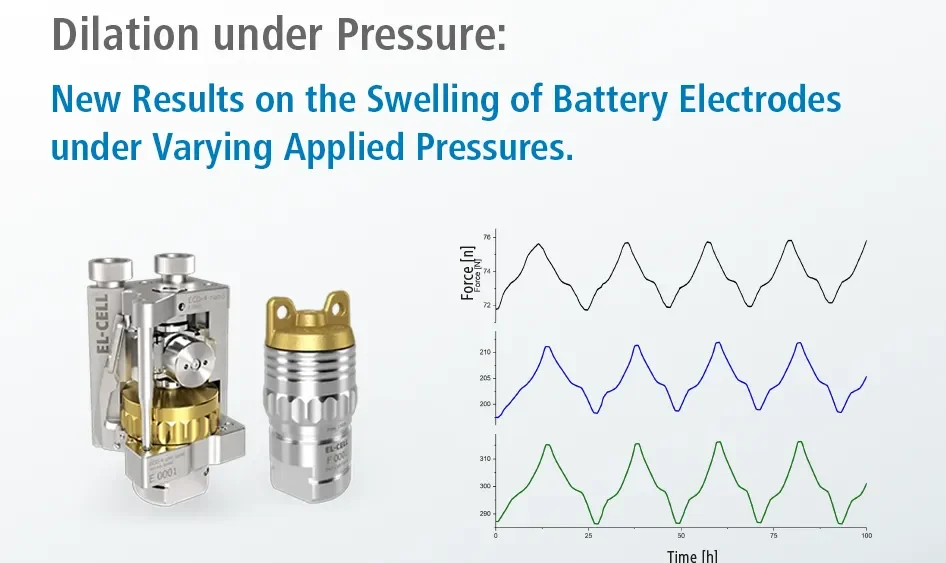
In this work, we present a novel approach to investigating the dilation of battery electrode materials under varying pressures applied onto the cell stack. For that, the PAT-Cell Force was used, along with specially designed spring yokes that have precisely defined spring characteristics. The PAT-Cell Force is equipped with a... read more →
May
02
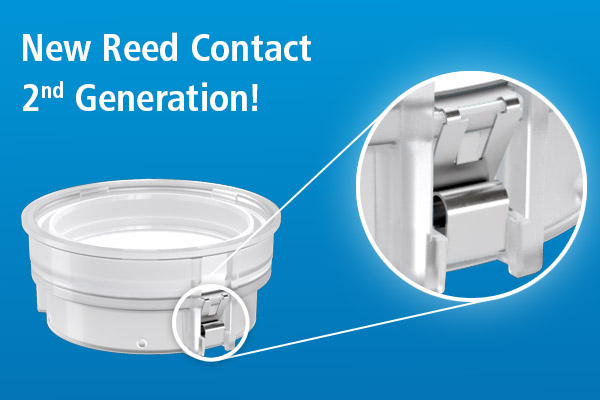
Further Improve Your Measurements with the New Reed Contact Generation! It may seem inconspicuous, but the reed contact is a central element in every PAT-Core, as it transmits the signal from the reference electrode to the contact pin of the PAT-Cell and, via this, to the potentiostat. A stable mechanical... read more →
Aug
01
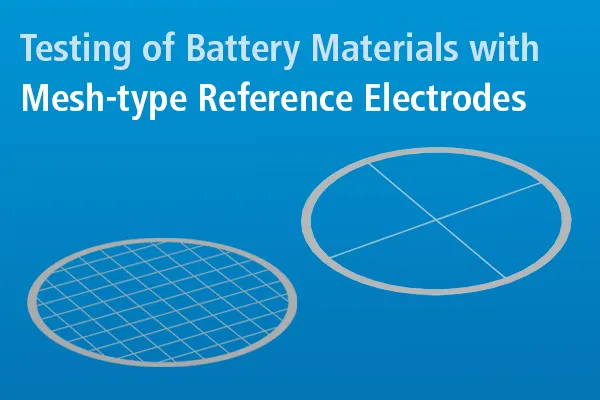
Testing of Battery Materials with Mesh-type Reference Electrodes A long time ago, we advertised to use a finger-type (aka wire-type) reference electrode. Everything we wrote still holds. However, the bad news is that the finger-type reference electrode is no longer available. The good news is that we now have an... read more →
Jul
05
Comparing Seal Materials: When should I use aluminum or PE seals? The battery test cells in the PAT series are characterized by their high impermeability to the outside atmosphere. This increases the long-term stability of the cell chemistry and enables long-term measurements over several thousand hours. (See example here.)... read more →
Oct
20
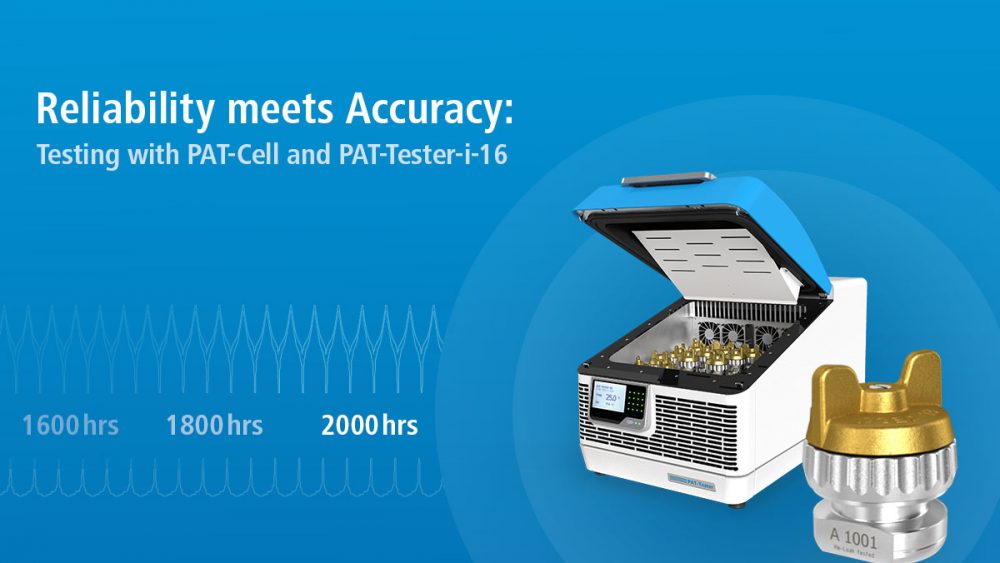
Reliability meets Accuracy: Testing with PAT-Cell and PAT-Tester-i-16. We want to show the results of our last long-term measurement (2000 hours) with the PAT-Cell. The PAT-Cell is our reliable and well-proven workhorse for efficient three-electrode measurements in the field of battery material research. In this measurement, five PAT-Cells were... read more →