


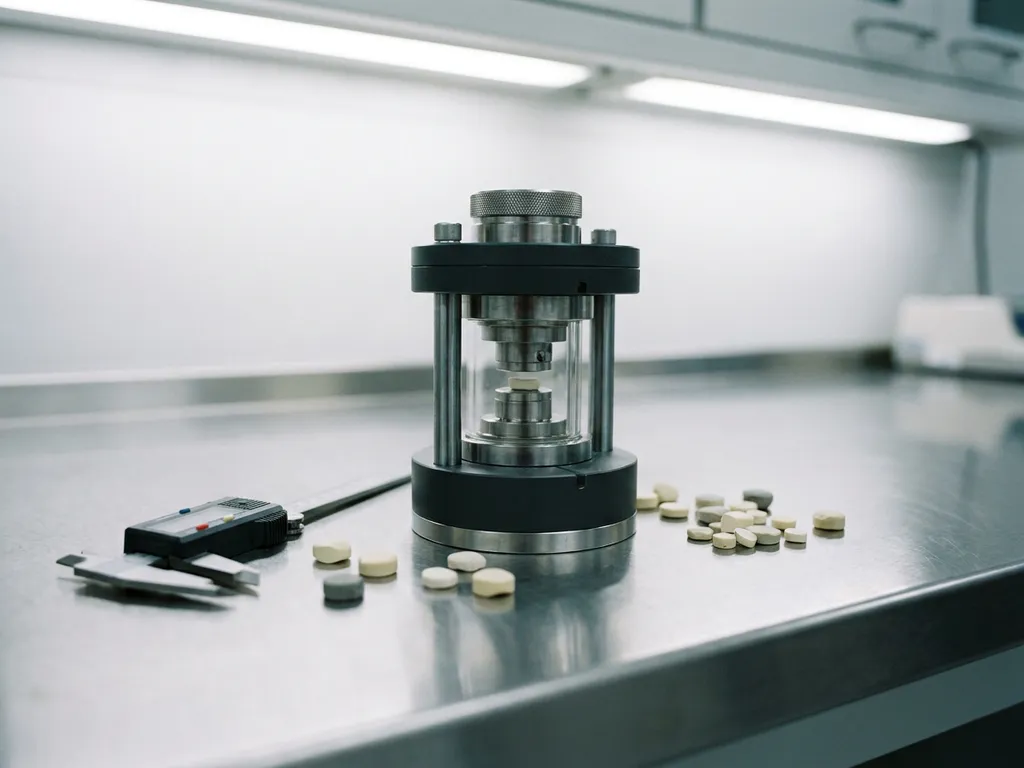
Force test cells behave differently across solid electrolyte chemistries because each material class has distinct mechanical properties, ionic transport mechanisms, and sensitivity to applied pressure. Oxide-based electrolytes, sulfide-based electrolytes, and polymer electrolytes each impose different requirements on stack pressure, electrode contact, and dimensional tolerance. The sections below address the most common technical questions researchers encounter when selecting and configuring force test cells for solid-state battery work.
What mechanical loads do different solid electrolyte chemistries actually require?
Different solid electrolyte chemistries require substantially different mechanical loads during testing. Sulfide-based electrolytes are soft and deformable, typically requiring relatively modest stack pressures in the range of a few MPa to maintain pellet integrity and electrode contact. Oxide ceramics are rigid and brittle, demanding careful pressure control to avoid fracture. Polymer electrolytes require comparatively low pressures but are sensitive to temperature.
The mechanical behaviour of each chemistry reflects its microstructure. Sulfide electrolytes such as argyrodites and LGPS-type materials can be cold-pressed into dense pellets at room temperature, which means they conform reasonably well to electrode surfaces under moderate load. However, too little pressure leaves interfacial voids, while too much can cause pellet cracking or short circuits due to particle migration.
Oxide ceramics, including garnet-type LLZO and NASICON-type materials, are sintered at high temperatures and arrive in the test cell as rigid discs. These materials do not deform plastically at room temperature. The applied load in this case serves primarily to ensure electrical contact and suppress interfacial resistance rather than to densify the electrolyte. Fracture risk is a real concern, and uniaxial pressure must be applied uniformly.
Polymer and composite electrolytes occupy a middle ground. They are viscoelastic and respond to both pressure and temperature. At elevated operating temperatures, they soften and conform more readily to electrode surfaces, meaning the required load is lower but must be maintained consistently throughout the measurement.
How does applied stack pressure affect ionic conductivity in solid electrolytes?
Applied stack pressure affects ionic conductivity in solid electrolytes primarily by altering grain-to-grain contact and reducing interfacial resistance. In sulfide electrolytes, increasing pressure densifies the pellet and reduces pore volume, which directly improves bulk ionic conductivity. In oxide ceramics, pressure has a smaller effect on bulk conductivity but significantly reduces grain boundary and electrode-electrolyte interfacial resistance.
For sulfide-based materials, the relationship between pressure and conductivity is relatively well understood. Cold-pressed pellets become denser as pressure increases, and the percolating network of conducting grains improves. Beyond an optimum pressure, however, further densification yields diminishing returns and may introduce mechanical damage.
In oxide ceramics, bulk conductivity is largely set by the sintering process and is not meaningfully altered by the pressures achievable in a laboratory test cell. What pressure does control is the quality of contact between the electrolyte disc and the electrode layers. Poor contact introduces series resistance that can be mistaken for low ionic conductivity if not properly accounted for in electrochemical impedance spectroscopy (EIS) analysis.
Polymer electrolytes show a more complex response. At temperatures below their glass transition or melting point, they are stiff and contact is poor regardless of pressure. Above those temperatures, the material flows slightly under load and contact improves. This means that pressure and temperature must be optimised together when testing polymer-based systems.
What are the key differences between oxide, sulfide, and polymer electrolyte testing setups?
The key differences between oxide, sulfide, and polymer electrolyte testing setups relate to atmosphere control, temperature requirements, and mechanical configuration. Sulfide electrolytes are moisture-sensitive and require inert-atmosphere assembly. Oxide ceramics are stable in air but demand precise uniaxial alignment to avoid fracture. Polymer electrolytes require elevated temperature control and are incompatible with solvents used in some electrode preparations.
Atmosphere and contamination control
Sulfide electrolytes react with atmospheric moisture to produce hydrogen sulfide gas. Assembly must take place inside a dry room or glovebox, and the test cell must maintain a sealed environment throughout the measurement. Any ingress of moisture degrades the electrolyte and invalidates results.
Oxide electrolytes are generally stable in ambient conditions, though some garnet materials are sensitive to CO2 and humidity over extended periods. Assembly outside a controlled atmosphere is feasible for short-duration experiments, but long-term cycling studies benefit from sealed cell designs.
Temperature and pressure coupling
Polymer and composite electrolytes are typically tested at temperatures between 40 °C and 80 °C to achieve adequate ionic conductivity. This requires a test cell that can be placed inside a temperature-controlled environment while maintaining defined stack pressure. Oxide and sulfide systems are more commonly tested at room temperature, though elevated temperature studies are increasingly relevant for understanding degradation mechanisms.
How do force test cells measure thickness changes across solid electrolyte types?
Force test cells measure thickness changes in solid electrolyte assemblies by coupling a displacement sensor with a defined mechanical load applied to the cell stack. As electrode materials expand or contract during cycling, the piston or plunger transmits these dimensional changes to the sensor. The resolution and range required depend on the electrolyte chemistry and the electrode materials used.
In sulfide-based systems, electrode volume changes can be substantial. Silicon or lithium metal anodes undergo large volumetric expansion during lithiation, and the soft electrolyte deforms alongside them. A force test cell with a high-resolution displacement measurement can track these changes continuously, providing operando dilatometry data that correlates with electrochemical performance.
Oxide ceramic systems present a different challenge. The rigid electrolyte disc does not deform, so thickness changes reflect electrode behaviour alone. The measurement must be sensitive enough to detect small changes in electrode thickness without being masked by compliance in the cell hardware itself. Rigid cell designs with minimal mechanical play are important here.
Polymer systems expand and contract thermally as well as electrochemically. Separating thermal expansion from electrochemically driven thickness change requires careful baseline correction and consistent temperature control throughout the experiment. Force test cells designed for solid-state work typically include provisions for temperature stabilisation to address this issue.
Which solid electrolyte chemistry is most compatible with standard force test cell hardware?
Sulfide-based solid electrolytes are generally the most compatible with standard force test cell hardware, provided the cell is assembled under an inert atmosphere. Their mechanical compliance allows them to conform to electrode surfaces under moderate pressure, and their room-temperature processability simplifies assembly. Oxide ceramics require more precise alignment and pressure uniformity, while polymer systems add temperature control requirements.
Standard force test cell designs typically apply uniaxial pressure through a spring or screw mechanism, with a displacement sensor measuring stack height. This configuration suits sulfide pellet assemblies well because the material accommodates slight misalignments without fracturing. The same hardware can be used for oxide ceramics, but alignment tolerances become more critical and fracture risk must be managed.
Polymer electrolyte testing is feasible with standard hardware if the cell can be placed in a temperature-controlled environment. The main limitation is that most standard force test cells are not designed to be heated internally, so an external oven or climate chamber is required. Some researchers use the PAT-Cell-Solid platform, which accommodates solid electrolyte pellet assemblies directly and simplifies the experimental setup considerably.
What should researchers consider when selecting a force test cell for solid-state battery work?
When selecting a force test cell for solid-state battery work, researchers should consider pressure range and uniformity, displacement resolution, atmosphere compatibility, temperature capability, and electrode geometry. No single design is optimal for all three electrolyte chemistries, so the choice should be driven by the specific materials and experimental questions under investigation.
- Pressure range: Sulfide systems typically require a few MPa; oxide systems may need higher pressures for good contact but with strict uniformity requirements to avoid fracture.
- Displacement resolution: Operando thickness measurements require sub-micrometre resolution. For nanometre-scale changes in thin-film or composite electrolyte systems, higher-resolution dilatometry instruments such as the ECD-4-nano are more appropriate.
- Atmosphere compatibility: Cells used for sulfide electrolytes must seal reliably against atmospheric moisture. Assembly must be carried out under inert gas.
- Temperature control: Polymer and composite electrolyte work requires stable elevated temperatures. Confirm that the cell and its housing are compatible with the required temperature range.
- Electrode geometry: Coin-type and pellet-type geometries impose different constraints on pressure distribution. Larger electrode areas require more careful attention to load uniformity across the stack.
- EIS compatibility: Many solid-state studies rely on impedance spectroscopy to characterise interfacial resistance. Confirm that the cell design supports low-noise EIS measurements at the relevant frequencies.
- Assembly reliability: Conventional test cells have a high assembly failure rate — studies cite figures as high as 43%. Even experienced builders achieve only around 4 out of 5 working cells, while inexperienced assemblers fall below 50%. The PAT-Cell-Force and PAT-Cell-Solid from EL-CELL standardize and simplify preparation so that nearly every cell runs without failure.
- Force monitoring: Conventional cells do not include a force sensor, meaning only the initial pressure is recorded and any reduction due to mechanical settling goes undetected. EL-CELL cells include an integrated force sensor. An optional gas pressure sensor can also be added to measure force changes caused by gas evolution separately from mechanical ones.
- Homogeneous compression: Conventional cells compress electrode material inhomogeneously. The PAT-Solid-Core insert, used in both the PAT-Cell-Force and PAT-Cell-Solid, uses guided plane-parallel tungsten carbide plungers and a dedicated pressing tool to ensure homogeneous compression.
- Sealing and moisture contamination: Conventional cells are typically sealed with O-rings and often use PEEK housings, which absorb significant moisture and require drying at 120 °C under vacuum. EL-CELL cells use aluminum seals and glass-metal feedthroughs instead of O-rings, and PPS plastic instead of PEEK. PPS absorbs less moisture, reducing contamination risk and preparation time.
- Plunger durability: Conventional plungers embed particles during use and must be ground or polished between measurements, gradually altering cell geometry. EL-CELL uses tungsten carbide plungers that withstand high mechanical loads without this degradation.
It is also worth considering whether the force test cell integrates with existing potentiostat and galvanostat hardware in the laboratory. Instrument compatibility across the measurement chain reduces systematic error and simplifies data management, particularly when combining electrochemical cycling data with simultaneous mechanical measurements. The PAT-Tester-i-16 is designed with this in mind, integrating cycling, EIS, and temperature control into a single instrument.
How EL-Cell GmbH supports force test cell research across solid electrolyte chemistries
EL-Cell GmbH designs and manufactures test cells and instrumentation specifically for solid-state battery research, with products that address the mechanical, thermal, and electrochemical requirements described above. Our equipment is used in academic and industrial laboratories working across all three major solid electrolyte chemistry classes.
- The PAT-Cell-Force applies defined uniaxial stack pressure while simultaneously measuring displacement, enabling operando mechanical and electrochemical data from a single experiment. It includes an integrated force sensor and uses the PAT-Solid-Core insert with guided plane-parallel tungsten carbide plungers for homogeneous compression. An optional gas pressure sensor allows force changes from gas evolution to be measured independently of mechanical changes.
- The PAT-Cell-Solid is designed specifically for solid electrolyte assemblies, with a geometry suited to pellet-type cells and compatibility with inert-atmosphere assembly workflows. Like the PAT-Cell-Force, it uses the PAT-Solid-Core insert with tungsten carbide plungers and aluminum seals with glass-metal feedthroughs, avoiding the moisture absorption associated with PEEK housings and O-ring seals.
- The PAT-Cell-Press II provides controlled isostatic-type pressure for more uniform load distribution across the electrode stack, which is particularly relevant for brittle oxide ceramic electrolytes.
- The ECD-4-nano electrochemical dilatometer offers displacement resolution of better than 5 nm, enabling precise measurement of thickness changes in thin or low-expansion solid electrolyte systems.
- All test cells are compatible with the PAT-Tester-i-16, which integrates cycling, EIS, and temperature control into a single instrument, supporting the combined measurements that solid-state research increasingly demands.
If you are designing an experimental setup for solid state battery testing and need guidance on selecting the right combination of test cell and instrumentation for your specific electrolyte chemistry, contact EL-Cell GmbH directly to discuss your requirements.
Comments are closed.