


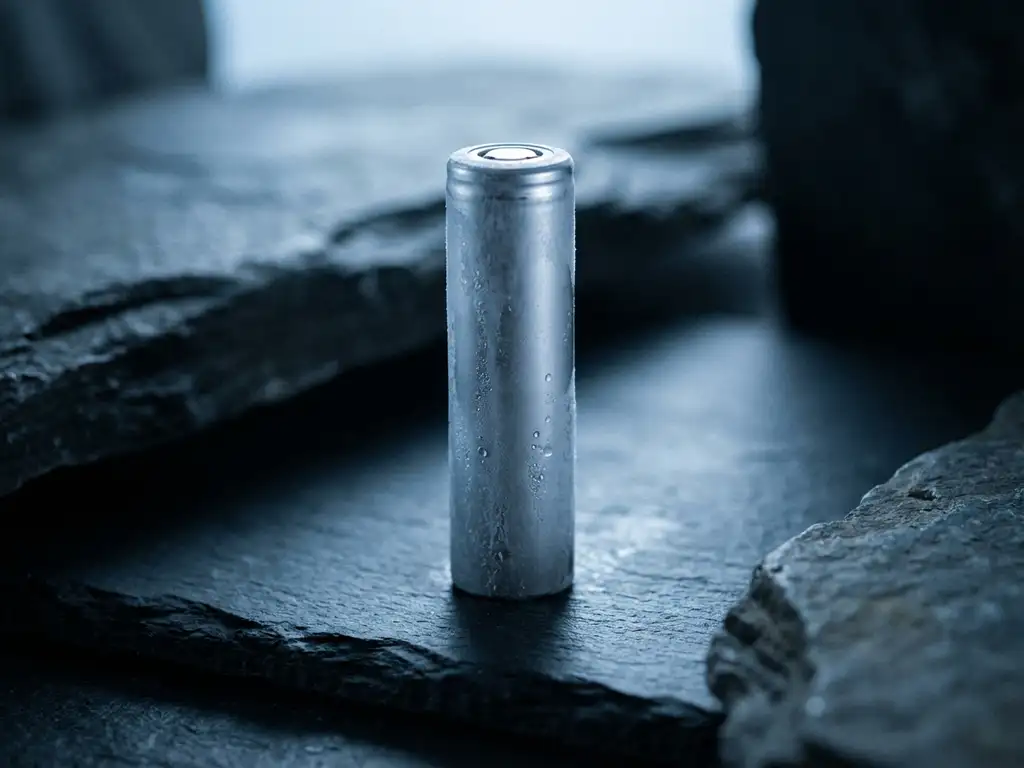
Lithium batteries do lose charge when not in use. This process, known as self-discharge, is a natural electrochemical phenomenon that occurs regardless of whether a battery is connected to a load. Understanding the mechanisms behind self-discharge is relevant not only for battery engineers designing storage protocols but also for researchers characterising electrode materials and electrolyte systems in the laboratory.
The rate and extent of self-discharge depend on several interconnected factors, from the electrochemical stability of the electrolyte to the physical state of the electrode interfaces. For battery materials researchers, accurately quantifying self-discharge is an important part of understanding how lithium-ion batteries work at a fundamental level.
Do lithium batteries lose charge when not in use?
Yes, lithium batteries lose charge when not in use, but at a relatively slow rate compared with other rechargeable chemistries. A lithium-ion cell stored at room temperature typically loses a small percentage of its capacity per month through self-discharge. The exact rate depends on the cell chemistry, state of charge (SoC), temperature, and the condition of internal interfaces such as the solid electrolyte interphase (SEI) layer.
Unlike nickel-metal hydride or nickel-cadmium cells, lithium-ion chemistries are known for their comparatively low self-discharge rates, which is one of the reasons they are widely used in applications requiring a long shelf life. However, self-discharge is never zero, and in research contexts, even small capacity losses during storage can affect the interpretation of electrochemical data.
Why do lithium batteries discharge even when not in use?
Self-discharge in lithium batteries occurs because the electrochemical system is never perfectly at equilibrium. Several parasitic reactions take place at both the anode and cathode, consuming charge without performing useful work. The primary mechanisms include electrolyte oxidation at the cathode, electrolyte reduction at the anode, and ongoing SEI formation and dissolution.
Parasitic reactions at the anode
At the graphite anode, lithium intercalated at low potentials is thermodynamically unstable in contact with conventional carbonate-based electrolytes. The SEI layer, which forms during the first charge-discharge cycles, provides a degree of kinetic protection. However, this layer is not perfectly stable and continues to evolve during storage, consuming lithium ions and contributing to capacity loss.
Reactions at the cathode
At the cathode, transition metal dissolution and electrolyte oxidation can also contribute to self-discharge. In layered oxide cathode materials, surface reactivity with the electrolyte leads to gradual capacity fade, even in the absence of applied current. These reactions are accelerated at elevated temperatures and high states of charge.
What factors affect how fast a lithium battery self-discharges?
The rate of self-discharge in a lithium-ion cell is governed primarily by temperature, state of charge, electrode chemistry, and the quality of the electrolyte and separator. Higher temperatures accelerate all parasitic reaction rates, while a higher state of charge places the electrodes at more reactive potentials, increasing the thermodynamic driving force for side reactions.
- Temperature: Elevated storage temperatures significantly increase self-discharge rates by accelerating electrolyte decomposition and SEI instability.
- State of charge: Cells stored at high SoC experience greater self-discharge because the electrode potentials are further from thermodynamic equilibrium.
- Electrode chemistry: Anode materials with lower intercalation potentials, such as lithium metal or silicon-based anodes, tend to exhibit higher self-discharge than graphite.
- Electrolyte composition: Electrolyte additives that stabilise the SEI layer can reduce self-discharge, while impurities or moisture can accelerate it.
- Separator integrity: Micro-shorts caused by lithium dendrites or separator defects can cause localised self-discharge that is difficult to detect by standard voltage monitoring.
For researchers developing new electrode materials or electrolyte formulations, understanding how each of these variables contributes to self-discharge is essential for producing reliable and reproducible results.
How long can a lithium battery hold its charge in storage?
A lithium-ion cell stored under controlled conditions—moderate temperature, partial state of charge, and low humidity—can retain the majority of its charge for several months to over a year. The precise duration depends on the cell chemistry and storage conditions, but well-formulated commercial cells stored at around 50% SoC and 15 to 25 degrees Celsius typically retain more than 80% of their charge after six to twelve months.
In a research context, the relevant question is often not simply how much charge is retained but what electrochemical changes occur during storage. Capacity loss during rest can reflect SEI growth, electrolyte decomposition, or transition metal dissolution, each of which has distinct implications for cell performance. Calendar ageing studies, which track capacity and impedance changes during storage, are a standard method for characterising these processes.
It is also worth noting that self-discharge is not always uniform across a cell. Localised reactions at electrode surfaces or near defects can create inhomogeneous lithium distribution, which may not be apparent from open-circuit voltage measurements alone.
What is the best way to store lithium batteries to preserve charge?
To minimise self-discharge during storage, lithium-ion cells should be stored at a partial state of charge, ideally between 40% and 60% SoC, at a temperature between 10 and 25 degrees Celsius, and in a low-humidity environment. These conditions reduce the thermodynamic driving force for parasitic reactions and slow SEI evolution.
- Store cells at 40 to 60% SoC to avoid the highly reactive potentials associated with full charge or deep discharge.
- Keep storage temperatures low but above freezing to reduce reaction kinetics without risking electrolyte condensation.
- Avoid prolonged storage at 100% SoC, which places cathode materials under oxidative stress and accelerates electrolyte decomposition.
- Minimise exposure to moisture and oxygen, particularly for cells with lithium metal anodes or moisture-sensitive solid electrolytes.
For research cells assembled in the laboratory, storage conditions are particularly important because the SEI layer on freshly formed electrodes may not yet be fully stabilised. Researchers should account for any rest period between cell assembly and testing when designing experimental protocols, as self-discharge during this period can affect baseline capacity measurements.
How is lithium battery self-discharge measured in research?
Self-discharge in lithium-ion cells is measured in research using several complementary electrochemical techniques. The most direct method is to charge a cell to a defined SoC, disconnect it, and measure the open-circuit voltage (OCV) over time. Capacity loss can then be quantified by comparing the discharge capacity before and after a defined rest period.
More detailed characterisation involves electrochemical impedance spectroscopy (EIS), which can track changes in interfacial resistance and SEI thickness during storage without requiring the cell to be cycled. An increase in impedance during rest is a reliable indicator of ongoing interfacial reactions that contribute to self-discharge.
Coulombic efficiency measurements provide another indirect measure of parasitic reactions. A coulombic efficiency below 100% on any given cycle reflects charge consumed by side reactions rather than reversible lithium intercalation. Tracking coulombic efficiency over many cycles, and comparing it between cells stored under different conditions, allows researchers to isolate the contribution of self-discharge to overall capacity fade.
For researchers studying electrode expansion during cycling or rest, electrochemical dilatometry offers an additional dimension. Thickness changes during open-circuit rest can reveal SEI growth or lithium plating that would not be detectable from voltage measurements alone. The ECD-4-nano electrochemical dilatometer, for example, resolves thickness changes to better than 5 nanometres, making it a sensitive tool for detecting interfacial processes during storage.
How EL-Cell GmbH supports self-discharge and calendar ageing research
Accurate characterisation of self-discharge and calendar ageing requires instrumentation that maintains stable, low-noise measurements over extended rest periods. EL-Cell GmbH provides a complete research ecosystem for this type of work, including:
- The PAT-Tester-i-16, a high-precision potentiostat and galvanostat with EIS capability and up to 16 independent channels, suitable for parallel calendar ageing studies across multiple cells or conditions.
- The ECD-4-nano electrochemical dilatometer for monitoring electrode thickness changes during storage, providing direct evidence of SEI evolution and lithium redistribution.
- The PAT-Cell platform, which provides reproducible cell assembly conditions and compatibility across the full PAT Series instrument range.
For researchers who require self-discharge measurements without setting up a full in-house protocol, EL-Cell GmbH also offers electrochemical testing services through our Application Laboratory. Our laboratory team assembles test cells from customer-supplied electrode materials, designs measurement protocols, and delivers complete evaluation reports. Contact us to discuss how we can support your calendar ageing or self-discharge characterisation work.
Comments are closed.