


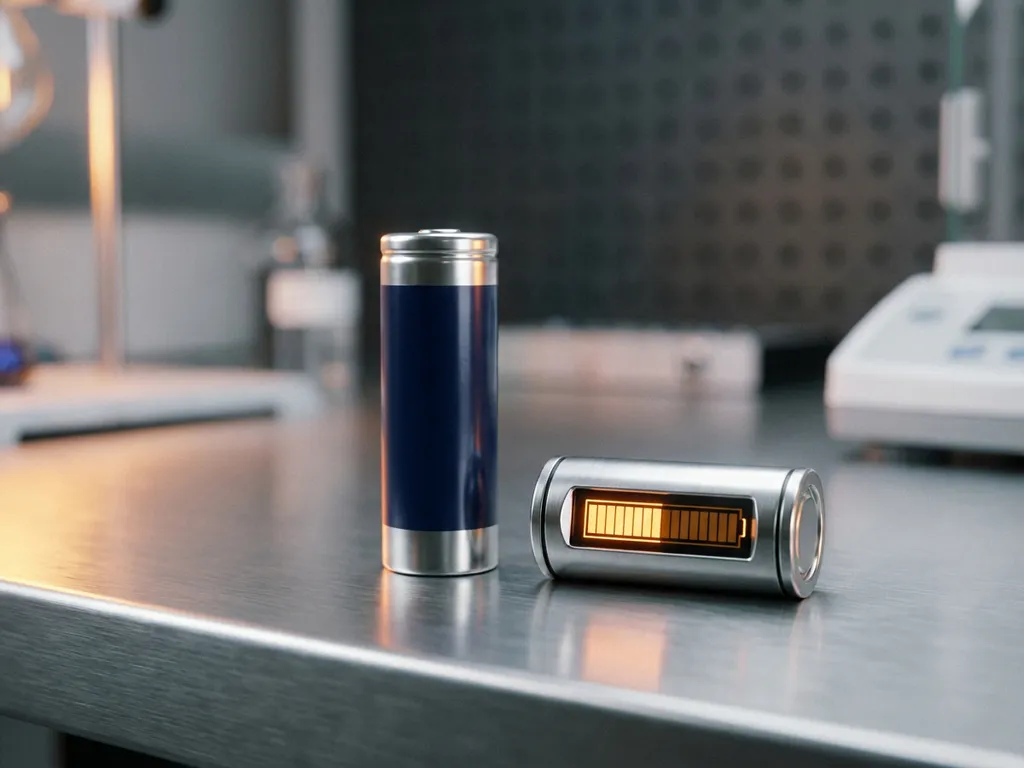
Battery percentage and battery health are topics that battery materials researchers encounter frequently—not as consumer concerns, but as fundamental electrochemical phenomena that govern electrode degradation, capacity fade, and cycle life. Understanding the mechanisms behind optimal state-of-charge (SoC) windows is essential for designing accurate ageing studies, interpreting cycling data, and developing materials that perform reliably over thousands of cycles.
This article addresses the core questions around battery percentage and health from a materials science perspective, with particular relevance to researchers working with lithium-ion and next-generation electrode chemistries in laboratory settings.
What is the healthiest battery percentage to maintain?
For lithium-ion cells, maintaining a state of charge between approximately 20% and 80% of nominal capacity minimises thermodynamic stress on both electrodes. Operating within this partial SoC window reduces the risk of lithium plating on the anode at high SoC and limits deep-delithiation-induced structural strain at low SoC, both of which accelerate capacity fade.
The specific optimal window depends on the electrode chemistry under investigation. Layered oxide cathodes such as NMC (lithium nickel manganese cobalt oxide) undergo phase transitions at high degrees of delithiation that introduce mechanical stress and accelerate surface reconstruction. Graphite anodes, meanwhile, are most susceptible to lithium plating when held at or near full lithiation, particularly at elevated C-rates. Researchers designing accelerated ageing protocols should therefore define the SoC window explicitly as part of the experimental design, rather than defaulting to full charge/discharge cycling unless the study specifically requires it.
In a laboratory context, the “healthiest” SoC window is not a fixed, universal value but a variable that must be matched to the electrode pair, electrolyte system, and degradation mechanism being studied.
Why does battery percentage affect battery lifespan?
Battery percentage affects lifespan because the electrochemical state of each electrode changes with SoC, and certain states impose greater mechanical, chemical, and structural stress. At high SoC, cathode lattice parameters expand or contract depending on chemistry, and the anode approaches full lithiation, increasing the risk of metallic lithium deposition. At low SoC, deep delithiation of the cathode can trigger irreversible phase changes.
Mechanical stress and volume change
Electrode materials expand and contract as lithium ions intercalate and deintercalate. Graphite, for example, undergoes a volumetric expansion of roughly 10% upon full lithiation. Repeated cycling through the full SoC range subjects the electrode particles to cumulative mechanical fatigue, leading to particle cracking and loss of electrical contact within the electrode. Quantifying this dimensional change is a key task in electrode characterisation, and instruments such as the ECD-4-nano electrochemical dilatometer enable researchers to measure electrode thickness changes with sub-nanometre resolution during cycling.
SEI layer growth and parasitic reactions
The solid electrolyte interphase (SEI) layer, which forms on the anode surface during initial cycling, continues to grow slowly throughout the cell’s life. At high SoC, the anode potential is low, which thermodynamically favours continued electrolyte reduction and SEI thickening. This consumes lithium inventory irreversibly, reducing coulombic efficiency over time. The SoC window therefore directly controls the rate at which these parasitic reactions proceed.
What happens if you always charge your battery to 100%?
Consistently charging to 100% SoC (full lithiation of the anode and full delithiation of the cathode) accelerates several degradation mechanisms simultaneously. These include lithium plating at the anode, accelerated SEI growth, cathode surface reconstruction, and increased mechanical stress from maximum volume change. The cumulative effect is faster capacity fade and reduced cycle life compared with partial SoC cycling.
From a research perspective, full-SoC cycling is often used deliberately in accelerated ageing studies to generate measurable degradation within a tractable number of cycles. However, researchers must be aware that results obtained under full-SoC conditions may not translate directly to partial-SoC performance, and experimental protocols should be designed accordingly. Overpotential measurements and differential capacity analysis (dQ/dV) are useful tools for identifying when degradation mechanisms shift as a function of the applied SoC window.
Is it bad to let your battery drop to 0%?
Deep discharge to 0% SoC, corresponding to full delithiation of the anode and full lithiation of the cathode, imposes significant stress on the cell. At very low SoC, copper current collector dissolution can occur if the anode potential rises above approximately 3.5 V vs. Li/Li+, which is particularly relevant in full-cell configurations. Cathode materials may also undergo irreversible structural changes at extreme delithiation states.
In laboratory cycling experiments, the lower voltage cut-off is a critical experimental parameter. Setting it too low risks copper dissolution and permanent cell damage, while setting it too high may not fully utilise the active material’s capacity. Researchers should define voltage cut-offs based on the thermodynamic stability windows of the specific electrode materials being tested, rather than applying generic values. Half-cell measurements against a lithium-metal reference electrode can help establish the appropriate potential limits for each electrode independently before constructing full cells.
What’s the difference between battery health and battery percentage?
Battery percentage refers to the current state of charge (SoC) of a cell, expressed as a fraction of its present usable capacity. Battery health, more precisely termed state of health (SoH), refers to the ratio of the cell’s current maximum capacity to its original rated capacity. SoC describes where the cell is within its current range; SoH describes how that range has changed over time due to ageing.
In electrochemical research, these two quantities are measured and tracked independently. SoC is controlled through charge/discharge protocols and monitored via voltage and coulomb counting. SoH is determined by periodically measuring the cell’s full capacity under standardised conditions, typically using a slow C/10 or C/20 charge/discharge cycle, and comparing it with the initial value. Techniques such as electrochemical impedance spectroscopy (EIS) provide additional diagnostic information by resolving contributions from different degradation mechanisms, including increases in ohmic resistance, growth in charge-transfer resistance, and diffusion limitations.
Why the distinction matters in research
Conflating SoC and SoH leads to errors in experimental interpretation. A cell that appears to be at 50% SoC may actually be delivering only 70% of its original capacity if SoH has declined significantly. Researchers must track both parameters independently throughout a cycling study to draw accurate conclusions about degradation rates and mechanisms.
How do researchers measure battery degradation accurately?
Accurate measurement of battery degradation requires a combination of electrochemical cycling, periodic capacity checks, and diagnostic techniques applied at defined intervals. The core metrics are capacity retention (mAh or mAh/g), coulombic efficiency per cycle, and internal resistance evolution. These are supplemented by techniques such as EIS, differential voltage analysis (DVA), and incremental capacity analysis (ICA) to identify the underlying degradation mechanisms.
In-situ and operando characterisation
Beyond standard cycling metrics, in-situ and operando measurements provide mechanistic insight that post-mortem analysis cannot. Measuring electrode thickness change during cycling, for example, reveals volume expansion behaviour and can identify the onset of lithium plating or particle cracking before they manifest as capacity loss. Similarly, operando optical or gas-analysis measurements can detect electrolyte decomposition or gassing events in real time.
Reproducibility is a fundamental requirement in degradation studies. Cell assembly, electrolyte volume, electrode loading, and stack pressure all influence the results, and these variables must be controlled precisely. Research-grade test cells with defined geometry and controlled assembly procedures are essential for generating data that are comparable across experiments and between laboratories.
The role of the C-rate in degradation measurement
The C-rate at which a cell is cycled strongly influences the degradation pathway observed. High-C-rate cycling favours kinetic degradation mechanisms such as lithium plating and electrolyte decomposition at elevated overpotentials, while low-C-rate cycling is more sensitive to thermodynamic degradation such as phase transformations and slow parasitic reactions. A well-designed degradation study will include both rate-capability testing and long-term cycling at a defined C-rate to separate these contributions.
How EL-Cell GmbH supports battery degradation research
EL-Cell GmbH designs and manufactures the instrumentation and test cells that enable researchers to study the degradation mechanisms described throughout this article with precision and reproducibility. Our product ecosystem is built around the PAT Series, which provides a fully interoperable platform for electrochemical testing across a wide range of cell configurations and measurement techniques.
- The PAT-Tester-i-16 provides up to 16 independent test channels with potentiostat/galvanostat and EIS capabilities, enabling high-throughput cycling studies with full diagnostic access on each channel.
- The ECD-4-nano electrochemical dilatometer quantifies electrode thickness changes during cycling with a resolution better than 5 nm, making it suitable for operando volume-change measurements across the full SoC range.
- The PAT-Cell provides a standardised, reproducible cell geometry for half-cell and full-cell cycling experiments, with controlled stack pressure and defined electrolyte volume.
- Our Application Laboratory offers electrochemical testing services for researchers who require outsourced measurements: our team assembles cells from customer-supplied electrode materials or electrolytes, designs measurement protocols, and delivers results with full data evaluation.
If your research requires precise control over SoC windows, cycle-life measurements, or in-situ degradation characterisation, contact EL-Cell GmbH to discuss which instruments and cell configurations are most appropriate for your experimental requirements.
Comments are closed.