


—
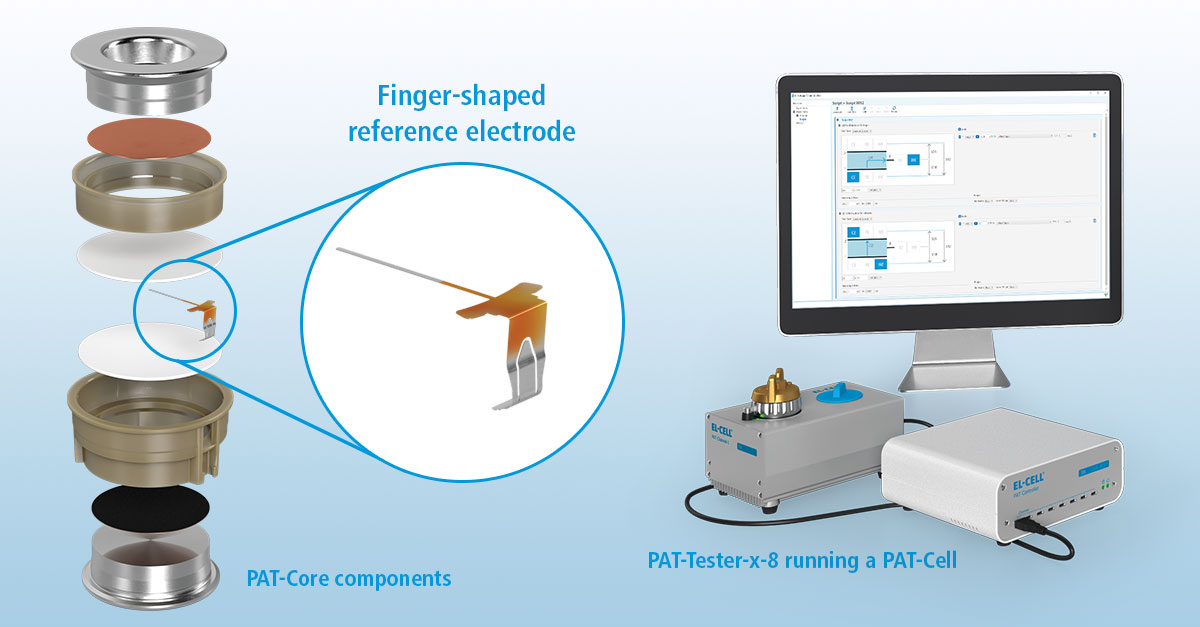
The finger-shaped reference electrode is considered useful for several scenarios:
- It can be employed as a stainless steel pseudo-reference electrode.
- It can be coated by the user with a reference material (e.g. LTO).
- It can be lithiated or delithiated by the user in-situ after cell assembly.
All these scenarios are perfectly supported by our PAT battery testers, like the PAT Tester-x-8 and EL-Software. This is shown here using the example of a cell consisting of NCM and graphite. After building the cell, the stainless steel finger is first electroplated with lithium utilizing the NCM electrode as the lithium source.
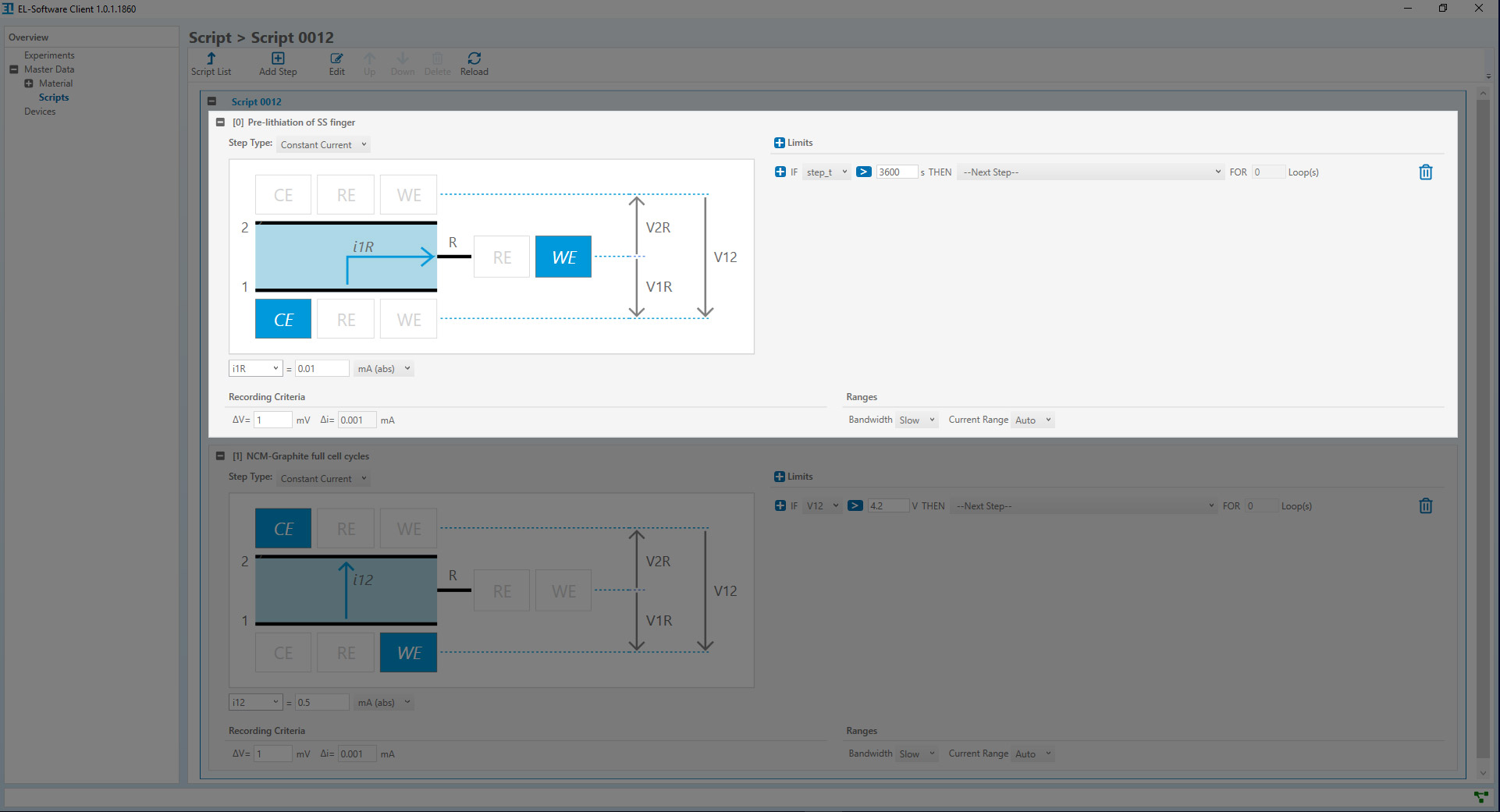
Pre-lithiation of the finger-shaped stainless steel electrode (R) from the NCM electrode (1)
In the second step, the lithiated finger is used as a stable reference electrode when cycling the NCM / graphite cell. Switching between the two modes is easy to do in the test script. No cable connections need to be changed, as would be necessary with a conventional battery tester.
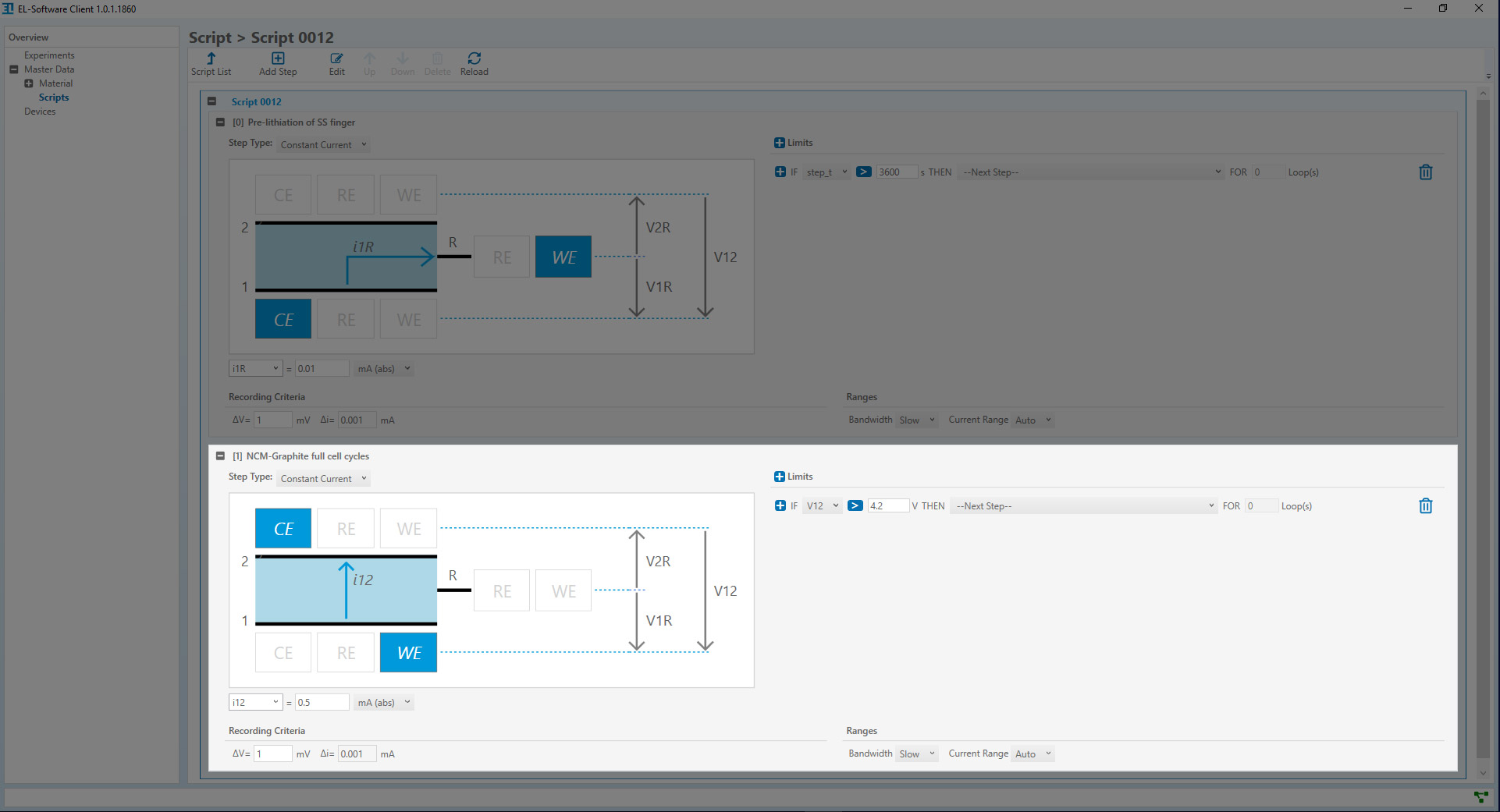
Once lithiated, the R electrode serves as a true reference when cycling the NCM / graphite cell.
Conclusion:
EL-Software and the PAT-Core make pre-lithiating a simple task.
About the author

Comments are closed.